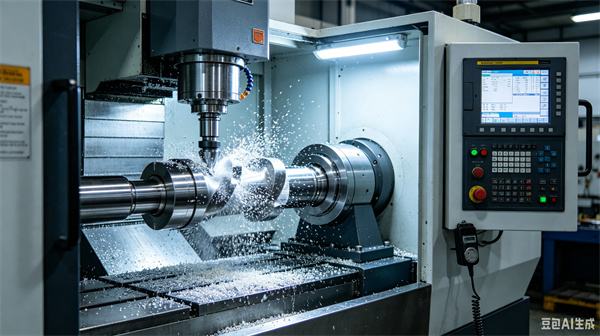
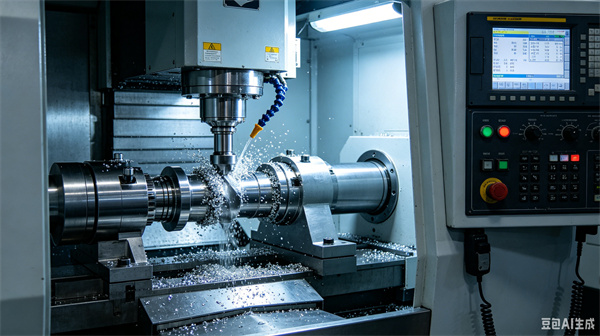
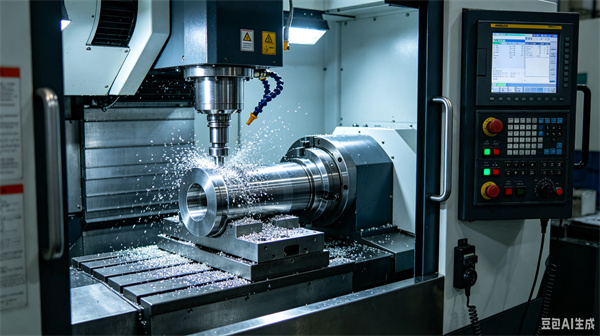
Computer Numerical Control (CNC) machining has become an indispensable backbone of modern precision manufacturing. Replacing traditional manual machining methods that rely heavily on human operation and experience, CNC machining utilizes pre-programmed computer software to control machine tools, including mills, lathes, routers, and grinders. This digital manufacturing technology has completely transformed production workflows, delivering unparalleled value in precision, efficiency, consistency, and cost control. Below are the key advantages that make CNC machining the preferred choice for industrial production, prototyping, and customized part manufacturing worldwide.
1. Exceptional Precision and Dimensional Accuracy
Precision is the most prominent competitive advantage of CNC machining. Powered by advanced digital control systems and high-sensitivity sensors, modern CNC machines can achieve ultra-tight tolerances up to ±0.001 millimeters, far exceeding the accuracy limits of manual machining. Every movement of the cutting tools, including displacement, speed, and cutting depth, is precisely calculated and executed by computer programs, eliminating human errors such as hand tremors, visual judgment deviations, and operational inconsistencies.
This superior precision is critical for high-end industries with strict quality requirements. Aerospace components, medical device parts, automotive precision accessories, and electronic hardware all rely on CNC machining to meet strict design specifications and geometric dimensioning standards. Even tiny structural details and complex curved surfaces can be processed with flawless accuracy, ensuring the stability and safety of finished products in long-term service.
2. Outstanding Repeatability and Consistent Product Quality
In mass production, maintaining uniform quality across all parts is a major challenge for traditional manufacturing. In contrast, CNC machining delivers perfect repeatability. Once a precise processing program is debugged and saved, the machine can replicate identical parts thousands or even tens of thousands of times without quality deviation. Whether producing 10 prototype samples or 10,000 batch products, the dimensional accuracy, surface finish, and structural performance of each workpiece remain highly consistent.
This feature effectively solves the common problems of inconsistent product quality, high defect rates, and frequent rework in manual processing. It greatly improves product qualification rates, unifies product standards, and facilitates standardized industrial production, which is essential for brand quality control and large-scale market supply.
3. High Production Efficiency and Uninterrupted Operation
CNC machining significantly boosts production efficiency and shortens manufacturing lead times through high automation. Unlike manual machines that require continuous human supervision and intermittent operation, CNC equipment can achieve 24/7 uninterrupted production as long as raw materials are sufficient and routine maintenance is completed. It avoids production stagnation caused by human fatigue, shifts, and rest breaks, greatly improving production capacity.
In addition, CNC machines support one-time clamping and multi-process composite processing. A single device can complete milling, drilling, tapping, grooving, and other multiple processes, eliminating the need for repeated workpiece positioning and handling required by traditional separate processes. The program switching speed is extremely fast, and the setup time for product replacement is short, which not only accelerates the production rhythm but also effectively shortens the overall production cycle, meeting the urgent delivery needs of various orders.
4. Strong Processing Flexibility for Complex Geometries and Customization
Traditional manual machining is limited by the operating ability of workers and the structure of ordinary equipment, making it difficult to process workpieces with complex three-dimensional structures, special curved surfaces, and irregular shapes. CNC machining breaks through these limitations perfectly. Relying on professional CAM programming software, it can accurately convert complex design drawings into executable processing programs, realizing the forming of almost all geometric structures.
This flexibility also makes CNC machining highly adaptable to personalized customization and multi-variety production. Manufacturers only need to modify the digital program parameters instead of replacing mechanical molds or adjusting equipment structures, which can quickly switch between different product styles and specifications. It is perfectly suitable for small-batch customized production of medical parts, mechanical prototypes, and special industrial components, solving the high-cost problem of traditional mold opening for small-batch products.
5. Reduced Production Costs and Optimized Resource Utilization
Although CNC equipment has a certain initial investment and programming cost, it brings significant long-term cost savings for manufacturing enterprises. First, the high precision and low error rate greatly reduce the scrap rate and rework cost, avoiding material waste and labor loss caused by defective products. Second, the high degree of automation reduces the demand for manual operators, lowering long-term labor costs and management costs for enterprises.
Moreover, CNC systems can intelligently optimize tool paths and cutting sequences, minimize unnecessary material removal, and improve raw material utilization. Most metal chips and excess materials produced during processing can be recycled, further reducing production costs. In addition, the integrated multi-process processing mode simplifies the production process, reduces intermediate logistics links and equipment occupancy costs, and comprehensively improves the economic benefits of production.
6. Improved Operational Safety and Low Maintenance Difficulty
Modern CNC machines are equipped with complete safety protection devices and fully enclosed processing structures. Workers only need to complete program input, workpiece loading and unloading, and equipment monitoring, and do not need to be close to high-speed rotating cutting tools. This greatly reduces the risk of mechanical injury, cutting accidents, and industrial injuries, effectively improving the safety level of the production workshop.
In terms of equipment maintenance, CNC machines adopt standardized modular design. Daily maintenance only includes regular cleaning, lubrication, and calibration. The built-in intelligent monitoring system can automatically detect equipment operation faults and remind maintenance, reducing equipment failure rates and downtime, and ensuring stable and continuous production operation.
Conclusion
From precision accuracy and stable quality to high efficiency, flexible production, and cost optimization, CNC machining covers all the core demands of modern manufacturing. It not only solves the pain points of low precision, unstable quality and low efficiency in traditional manual processing, but also adapts to the development trend of industrial intelligence, customization and large-scale production. As manufacturing technology continues to iterate, CNC machining will remain a core manufacturing technology, continuously empowering the upgrading of aerospace, medical, automotive, mechanical and other industries.