- Engineering support
Good Questions.
Before Production.
Part of Dawnmill’s Engineering & Quality System.
Dawnmill’s engineering support focuses on manufacturability: drawing clarity, geometry, workholding, tool access, process sequence, finishing and inspection. Product design authority remains with the customer.
- DFM Review
- Drawing Review
- GD&T Discussion
- Process Planning
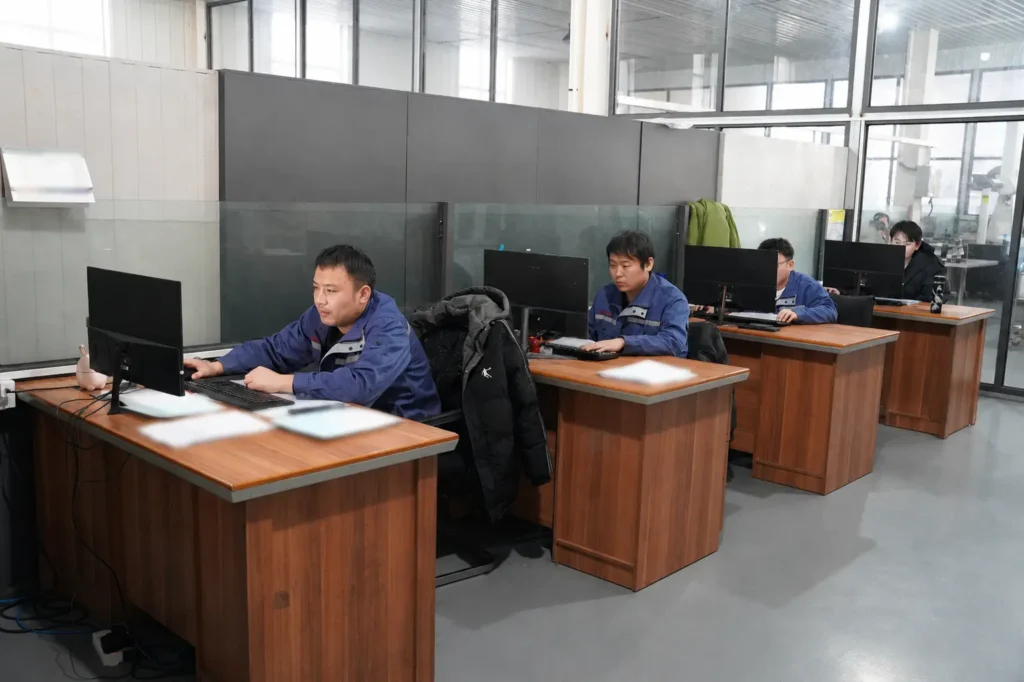
Dawnmill engineering team · real working environment
- Support scope
Useful at Every
Manufacturing Transition.
The questions change by project stage, but the goal stays the same: make the production requirement clear before work begins.
Early Review
- Manufacturing feasibility discussion
- Missing-information check
- Preliminary process considerations
Prototype & NPI
- Setup and access review
- First-article priorities
- Design-change implications
Repeat Production
- Revision review
- Process continuity
- Change impact discussion
Complex Routes
- CNC and EDM sequence
- Finishing allowance
- Inspection planning
- Technical specifications & process limits
Define the Range.
Then Commit.
The range below shows what matters for this topic. The applicable process, limits and verification method are confirmed against the actual drawing, material and final condition.
Project-specific values confirmed before production.
Scope Manufacturability, workholding, tool access, process sequence, finishing and inspection review. | Review timing Confirmed after file completeness, part complexity and open requirements are checked; the first response defines the practical next step. |
Design authority Product function, released design and final approval remain with the customer. | Useful inputs Current 2D/3D files, material, quantity, finish, critical features and documentation needs. |
- What we review
Focus on What
Changes the Route.
The review is practical and selective. It concentrates on information that affects manufacturing risk, quality or timing.
DFM REVIEW
Geometry & Access
- Tool reach, internal corners, deep features, thin walls and multi-sided relationships.
- How critical features relate to setups, process capability and inspection.
PROCESS CONTROL
Material & Finish
- How stock condition, machining behavior and final surface requirements influence the route.
- Focus on access, relationships, finishing and verification.
INSPECTION & RECORDS
Customer Design Authority
- The customer controls product function, released design and acceptance criteria.
- We explain practical production, process and verification considerations.
PROCESS LOGIC
Read. Clarify. Plan. Confirm.
A useful engineering review ends with a clearer manufacturing path and visible open questions.
01
Review Available Files
02
Identify Route-Changing Issues
03
Discuss Practical Options
04
Confirm the Basis
- Clear boundary
Advice Is Useful
When Ownership Is Clear.
Manufacturing feedback supports customer decisions; it does not replace product engineering, functional validation or customer approval.
REPRESENTATIVE ENGINEERING SCENARIO
Pre-production
drawing review
Illustrative review scenario—not a published customer case. Customer parts and records remain confidential.
Challenge
A deep feature, thin wall and inspection access create conflicting process choices.
Process Strategy
Identify the route-changing questions, explain practical options and wait for the customer’s confirmed release where design input is required.
Inspection
Connect the agreed manufacturing and inspection basis to the current drawing revision.
Result
Target: the confirmed requirement and agreed evidence remain connected through manufacturing engineering support.
CAPABILITY EVIDENCE
Direct review by a focused manufacturing team
Experience across CNC, EDM, stamping and coordinated finishing
Questions raised before production when they affect risk, quality or timing
- Related Capabilities
Continue Without
Returning to the Menu.
Complex Part Manufacturing
See how interacting geometry and tolerances shape the complete route.
Quality System
Carry the confirmed requirement from review through final release.
Upload RFQ
Share the current files and identify the questions that matter most.
- Questions before the RFQ
Clear the
Important Doubts.
Four topic-specific answers keep the next step practical and direct.
How is DFM review timing confirmed?
Timing depends on drawing completeness, part complexity and the number of open requirements. We first acknowledge the RFQ, identify missing information and confirm the next review step.
Will Dawnmill change my drawing?
No change is assumed. We explain manufacturing implications and options; your team retains design authority and approval.
How is the Manufacturing Engineering Support scope agreed?
The scope is defined from the released drawing, critical features, acceptance criteria and requested records before production begins.
Can customer-specific requirements be included?
Yes. Supply the required methods, report format, traceability and approval expectations during quotation so they can be reviewed and planned.
View of the Drawing?
Send the current files and program context. We’ll identify the questions that materially affect the manufacturing path.
Factory, equipment and inspection photos show real Dawnmill facilities. AI-generated visuals are used only for confidential component and application concepts tied to Dawnmill’s served industries and available manufacturing processes; they are not customer parts, factory evidence or test records.