- Metal stamping & sheet metal
Metal Stamping.
Built for Repeatability.
Part of Dawnmill’s Integrated Precision Machining Capabilities.
Metal stamping is one of Dawnmill’s principal manufacturing capabilities—supported by cutting, forming, bending and secondary operations when the finished component requires them.
- Metal Stamping
- Stamping & Punching
- Sheet Cutting
- Supporting Forming
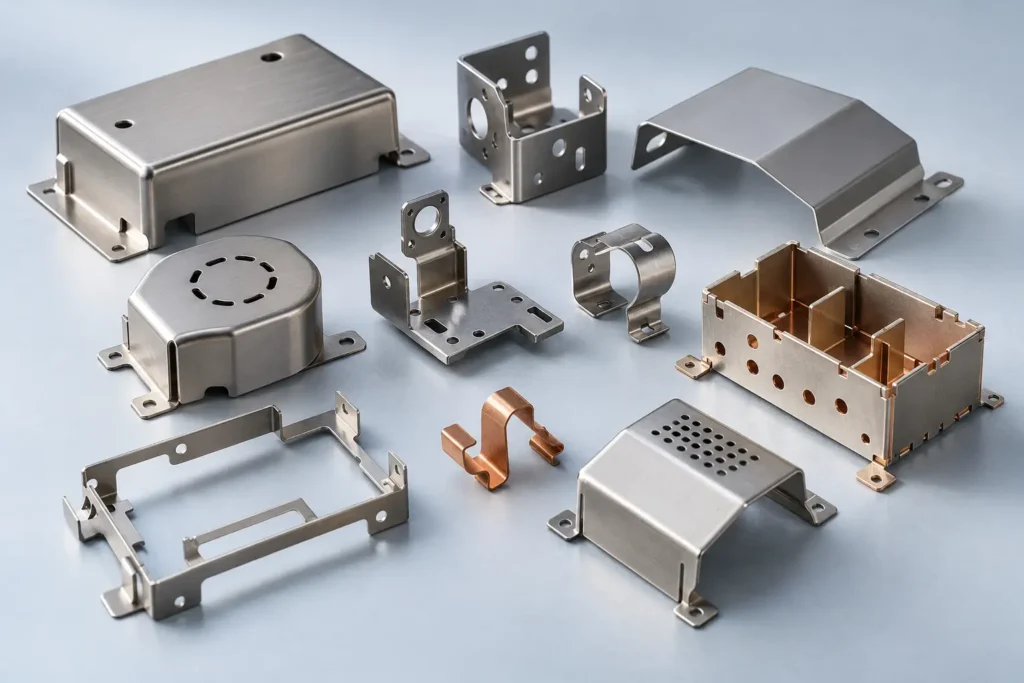
AI concept · compact stamped component families for semiconductor equipment, robotics, AI liquid cooling and industrial RF · not customer parts
- Component focus
Stamping Leads.
Fabrication Supports.
Bending is treated as a supporting operation where it adds value to the finished stamped component—not as Dawnmill’s main capability story.
Stamped Components
- Functional brackets and plates
- Contacts and conductive components
- Covers, shields and formed profiles
Supporting Fabrication
- Sheet cutting and punching
- Forming and controlled bending
- Deburring and edge preparation
Secondary Integration
- Machined details where required
- Mechanical finishing and marking
- Assembly and component integration
Finishing Route
- Plating
- Coating
- Final dimensional and visual checks
- Technical specifications & process limits
Define the Range.
Then Commit.
The range below shows what matters for this topic. The applicable process, limits and verification method are confirmed against the actual drawing, material and final condition.
Project-specific values confirmed before production.
Core focus Metal stamping and punching for repeat functional components, supported by cutting, forming and bending. | Part scale Primary focus on hand-sized to small desktop-sized sheet-metal components; thickness and developed size are confirmed from material and drawing. |
Materials Grade, temper, thickness, grain direction and finish are reviewed by project. | Tolerance Feature and formed-condition capability depends on tooling, material behavior, geometry and production volume. |
- Stamping review
Tooling and Material
Start with the Part.
We review the production intent and the features that affect die strategy, material flow, edge condition and downstream operations.
DFM REVIEW
Part Geometry
- Profiles, holes, bends, formed details and relationships that influence the operation sequence.
- A practical die and process concept based on part complexity, quantity and repeat demand.
PROCESS CONTROL
Material Behavior
- Grade, thickness, grain direction and forming response considered against the requirement.
- Define the stamping approach and supporting operations.
INSPECTION & RECORDS
Tooling & Revision Control
- Keep the die route and production requirement aligned with the released drawing.
- Check profiles, holes, formed features and critical relationships using appropriate methods.

- AI concept · small stamped parts for semiconductor equipment, robotics, AI liquid cooling and industrial RF · not customer parts
Small Parts. Distinct Functions.
One Stamping Discipline.
This product-family view shows the types of compact sheet components Dawnmill is positioned to review: shields, sensor brackets, mounting frames, retaining clips and conductive contacts. It illustrates relevant applications and feature types—not actual customer parts or a claim that every pictured geometry has been produced.
PROCESS LOGIC
From Drawing to Repeat Production.
The route is defined around how the component will be produced, finished and verified over time.
01
Review Part & Volume
02
Plan Tooling & Sequence
03
Validate the Component
04
Control Repeat Runs
- Production control
Repeat the Geometry.
Protect the Requirement.
Quality planning follows the features and conditions that matter to fit, function and repeat production.
REPRESENTATIVE ENGINEERING SCENARIO
Stamped functional bracket
Illustrative review scenario—not a published customer case. Customer parts and records remain confidential.
Challenge
Hole-to-bend relationships, burr direction and final plating condition affect assembly fit.
Process Strategy
Plan tooling and operation order from the final component, then coordinate deburring, forming and finishing requirements.
Inspection
Check profiles, formed features and agreed assembly interfaces in the required final condition.
Result
Target: a controlled metal stamping & sheet metal manufacturing route that meets the released drawing and agreed final-condition checks.
CAPABILITY EVIDENCE
Stamping, punching and supporting sheet operations available
Tooling and repeat-run requirements reviewed together
Finishing and batch records available by agreement
- Related Capabilities
Continue Without
Returning to the Menu.
Finishing & Secondary Processes
Connect surface preparation, finishing and delivered condition to the stamped part.
Materials
Review how material grade and behavior influence the manufacturing route.
Engineering & Quality
Define drawing, inspection and documentation requirements before production.
- Questions before the RFQ
Clear the
Important Doubts.
Four topic-specific answers keep the next step practical and direct.
Is bending Dawnmill’s main sheet-metal capability?
No. Metal stamping is the principal story; cutting, forming and bending support the finished stamped component where required.
Can tooling be justified for smaller programs?
Tooling strategy depends on geometry, expected quantities and repeat demand. We review the economics rather than assuming one die approach for every part.
How is Metal Stamping & Sheet Metal Manufacturing feasibility confirmed?
We review the actual drawing, overall size, feature access, material, tolerances, finish and inspection method, then confirm the applicable route and limits.
Can this process be connected with other Dawnmill capabilities?
Yes. CNC, EDM, stamping, secondary work, finishing and inspection can be coordinated when the finished component requires a multi-process route.
Component in Mind?
Share the drawing, material, quantity and production stage. We’ll review the tooling and supporting process path.
Factory, equipment and inspection photos show real Dawnmill facilities. AI-generated visuals are used only for confidential component and application concepts tied to Dawnmill’s served industries and available manufacturing processes; they are not customer parts, factory evidence or test records.